

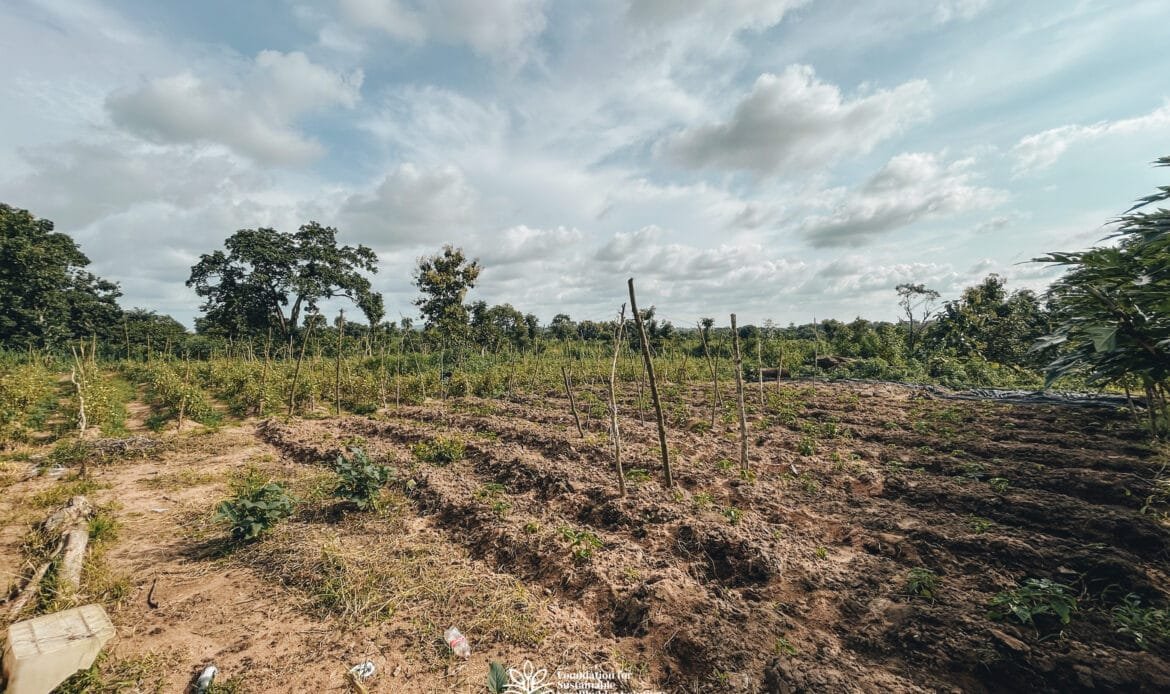
The Nigerian Meteorological Agency’s (NiMet) 2026 Seasonal Climate Prediction is officially published, and it offers a clear warning to farmers all across the different agroecological zones of Nigeria, especially smallholders: this will be a season where timing, planning, and risk management matter as much as rainfall itself. While the outlook shows that most parts of the country will receive rain, the pattern of that rainfall, combined with higher temperatures and longer dry spells in some regions, means farmers must make well-informed decisions before and during the season.
Below are the most important things farmers should note as they prepare for the 2026 planting season.
1. Early rainfall signals may be misleading
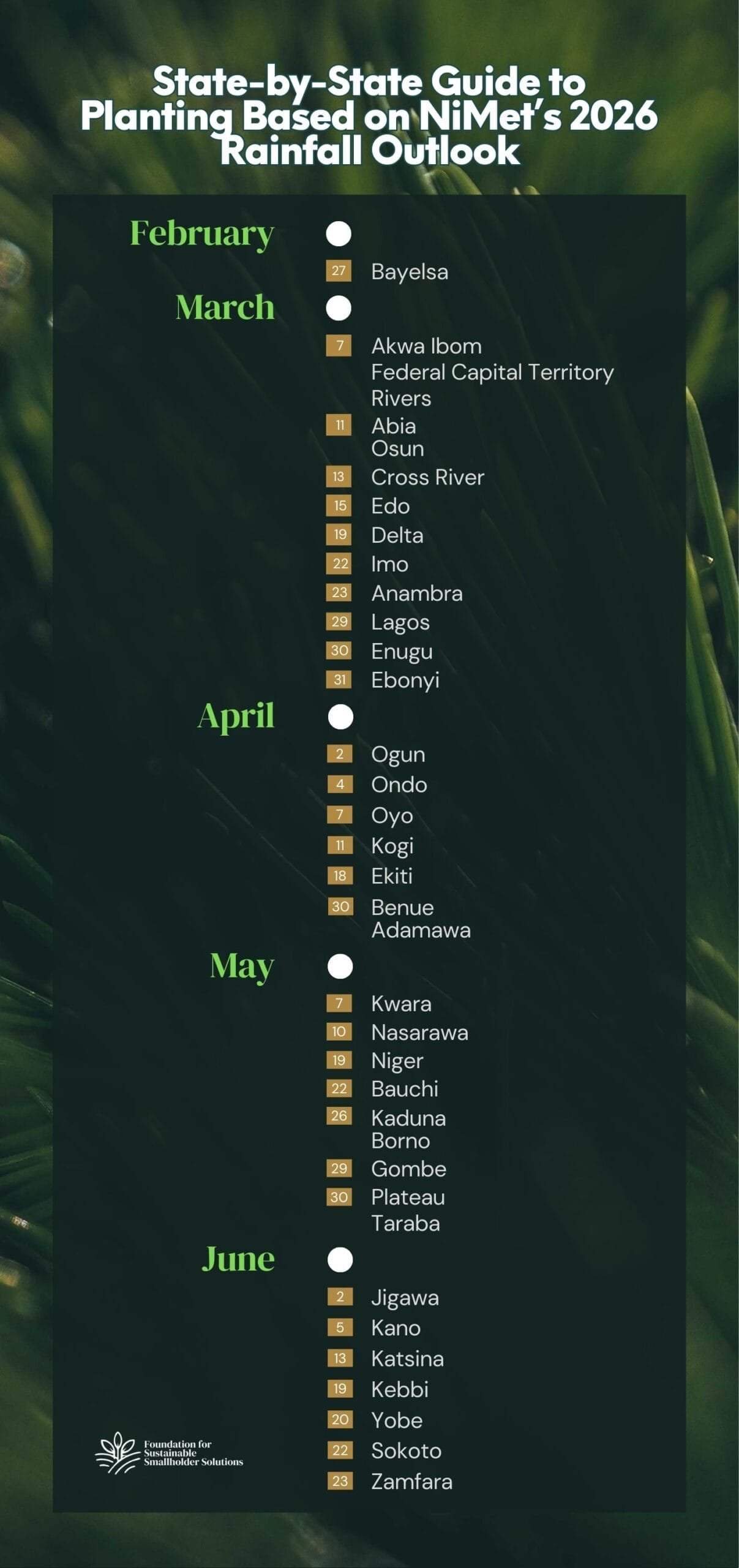
One of the strongest messages in the 2026 outlook is the risk of false onset of rainfall. In several southern and central states, rainfall is expected to occur early in the year, but these early showers may not be sustained. Planting immediately after the first rains could therefore expose farmers to seed loss and the cost of replanting if dry conditions return.
According to NiMet, early rainfall are expected in parts of Lagos, Ogun, Rivers, Bayelsa, Cross River, Benue, Kogi, Nasarawa, Oyo, and Niger states, where farmers are advised to be cautious before planting.
What to note is that rainfall establishment, not first rainfall, should guide planting decisions. Farmers are advised to wait until rains become consistent over several days, with enough soil moisture to support germination and early crop growth. This is particularly important for maize, rice, and vegetables that are sensitive at the early growth stage.
2. Mid-season dry spells will be a major risk in 2026
NiMet’s outlook highlights the likelihood of significant dry spells during the main growing season, especially between June and August. In parts of Northern and Central Nigeria, these dry spells could last up to two or three weeks after rainfall has already been established.
The report specifically identifies Bauchi, Borno, Gombe, Jigawa, Kano, Katsina, Kebbi, Niger, Sokoto, Yobe, Zamfara, and parts of Kwara and Nasarawa states as areas at risk of severe dry spells during this period.
What farmers should note is that crops may appear healthy early in the season, only to suffer moisture stress later. This can lead to poor flowering, reduced grain filling, and lower yields. Farmers should therefore adopt practices that help crops retain moisture, such as mulching, tied ridges, contour bunding, and staggered planting. Where possible, access to small-scale irrigation can serve as a critical backup during prolonged dry periods.
3. Northern Nigeria will face the highest climate stress
The outlook shows that large parts of Northern Nigeria will be exposed to severe dry spells, higher temperatures, and shorter effective growing periods. These conditions increase the risk of crop failure for late-planted or long-maturing varieties and place pressure on livestock feed and water availability.
NiMet highlights heightened vulnerability across Sokoto, Kebbi, Zamfara, Katsina, Jigawa, Kano, Yobe, Borno, Bauchi, Gombe, Niger, and northern parts of Kwara.
What to note here is the importance of crop choice and timing. Early-maturing and drought-tolerant crops such as millet, sorghum, cowpea, and early maize varieties are better suited to these conditions. Livestock farmers should plan ahead by storing crop residues and hay early in the season and managing herd sizes strategically to reduce pressure during peak dry periods.
4. The Middle Belt will experience unstable rainfall patterns
In the Middle Belt, rainfall is expected to be generally normal, but with interruptions. Short rainfall breaks lasting one to three weeks may occur during sensitive crop stages, particularly flowering.
NiMet indicates this pattern across Kaduna, Plateau, Benue, Nasarawa, Taraba, Adamawa, parts of Kogi, Kwara, and the Federal Capital Territory (FCT).
What farmers in this zone should note is that rainfall instability can reduce yields even when total rainfall appears sufficient. Intercropping cereals with legumes can help spread risk, while the use of organic manure improves soil structure and water retention. Timely weeding is also critical, as weeds compete aggressively for moisture during dry breaks.
5. Southern Nigeria should prepare for short dry breaks and pest pressure
Southern states are expected to experience shorter dry spells compared to the North, but these breaks may still affect crop establishment, particularly vegetables and young cassava. In addition, higher temperatures during dry periods can increase the incidence of pests and diseases.
NiMet identifies Lagos, Ogun, Oyo, Osun, Ekiti, Ondo, Edo, Delta, Ebonyi, Abia, Cross River, Akwa Ibom, Anambra, Enugu, Imo, Rivers, and Bayelsa as states likely to experience short dry breaks and Little Dry Season impacts.
What to note is that farmers should not assume low risk simply because rainfall is higher in the South. Good drainage is essential, as heavy rains may follow dry spells and cause flooding. Farmers should also increase pest monitoring and adopt integrated pest management practices rather than relying solely on chemical control.
6. Higher temperatures will increase crop and livestock stress
NiMet projects above-average daytime and night-time temperatures across most parts of the country in 2026. Higher temperatures increase evapotranspiration, meaning crops lose water faster and require more moisture to maintain growth.
States expected to experience pronounced heat stress include Katsina, Kano, Jigawa, Bauchi, Yobe, Borno, Zamfara, Niger, Kogi, Oyo, and parts of the South-East and South-South.
What farmers should note is that heat stress can reduce yields even when rainfall is adequate. Mulching, early planting, and proper spacing can help crops cope with higher temperatures. Livestock farmers should ensure reliable access to water and shade to prevent heat-related losses.
7. Early preparation will determine harvest outcomes
Perhaps the most important lesson from the 2026 outlook is that preparation before the season begins will largely determine success. Farmers who wait until problems appear may struggle to recover losses, while those who plan ahead can reduce risk significantly.
NiMet emphasises that farmers in dry spell–prone northern states and rainfall-variable central states should take early action between March and May to reduce climate-related losses.
What to note is that the period between March and May is critical. Farmers should follow NiMet updates, consult extension services, select appropriate seed varieties, and prepare soil and water management systems early. In 2026, proactive planning will be the difference between stable harvests and avoidable losses.
In summary, the 2026 farming season presents real challenges, but it also offers opportunities for farmers who respond with informed, climate-smart decisions. Understanding the weather outlook and acting early will be key to protecting livelihoods and ensuring food security.
Source: Nigerian Meteorological Agency (NiMet) 2026 Seasonal Climate Prediction