
Every year, International Women’s Day provides an opportunity to reflect on the role women play in shaping economies, policies, systems, communities, and futures. In agriculture, that role is especially significant. Across rural Africa and much of Nigeria, women contribute a substantial share of the agricultural labour that feeds households and sustains local economies. Yet the opportunities available to them rarely match the scale of their contribution.
To explore this challenge and its solutions, the Foundation, for the ESTRRA Project implemented in partnership with the Heineken Africa Foundation (HAF), hosted a webinar titled “Give to Gain: The Multiplier Effect of Investing in Women Across Food Systems and Enterprise.”
The webinar brought together professionals across the agriculture and development sectors to discuss how investing in women can transform rural economies and strengthen food systems.
The discussion centred on a simple but powerful idea: supporting women in agriculture is not charity; it is a strategic investment.
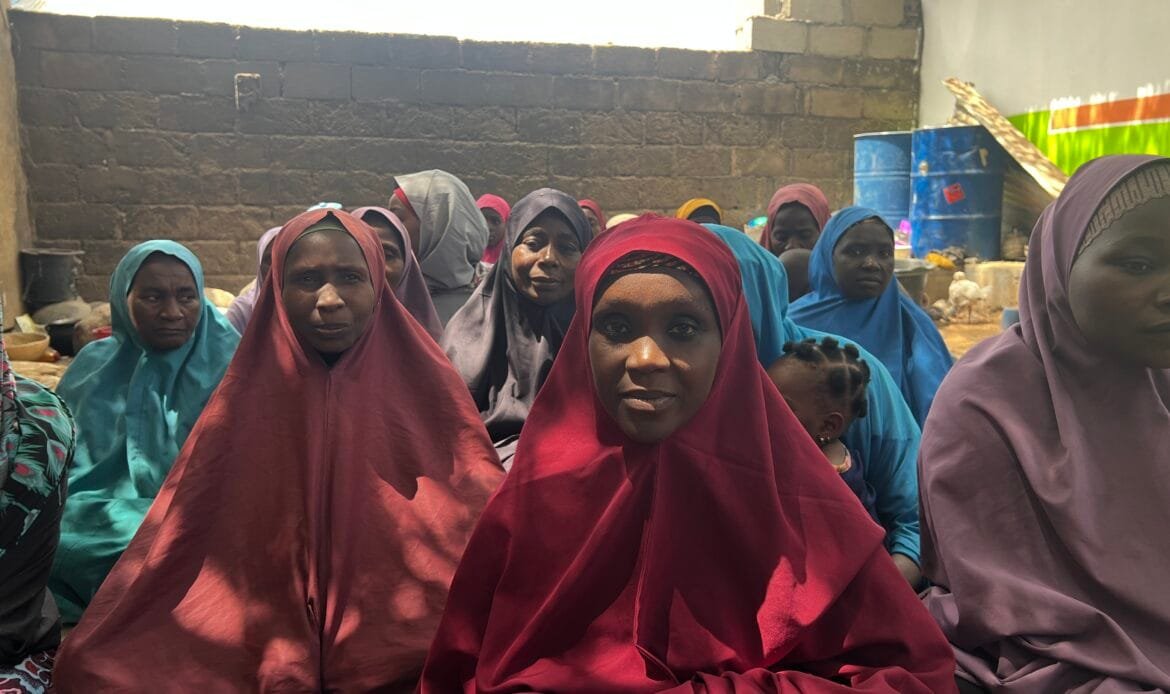
Women are deeply involved in every stage of the agricultural value chain. From planting and harvesting to processing and marketing produce, their work is central to food production and household nutrition. Despite this contribution, women often operate with fewer resources and less support than their male counterparts.
During the conversation, speakers highlighted that women make up a significant portion of Nigeria’s agricultural workforce, yet they continue to face structural barriers that limit their productivity and economic opportunities.
Hope Ayeni, Sustainability Advocate and Community Management Associate at Ecobarter Nigeria, explained the challenge clearly:
“Women are deeply involved in agricultural production, yet they often operate with the least access to land, finance, and decision-making power. Addressing these gaps is critical if we want truly inclusive food systems.”
Limited access to land ownership, difficulty securing financing due to a lack of collateral, and restricted participation in decision-making all affect the ability of women farmers to scale their agricultural activities. In many communities, social norms and limited access to information further constrain their opportunities.
These barriers do not only affect women individually; they also affect the productivity of entire farming systems.
One of the strongest ideas that emerged from the webinar was the concept of the multiplier effect. When women gain access to resources, knowledge, and economic opportunities, the benefits extend far beyond the individual farmer.
Women tend to reinvest a larger share of their income into their households, improving nutrition, education, and overall family wellbeing. Over time, this strengthens community resilience and local economies.
Ifeoluwa Oyeyemi, Founder and CEO of Farm Help Agrostores, described this impact during the discussion:
“When you invest in a woman, you are not just supporting one farmer. You are strengthening a household, improving nutrition, and creating stability in the wider community.”
This ripple effect is why many development experts increasingly see women’s empowerment as one of the most effective strategies for accelerating rural development.
Another key point raised during the discussion was the difference between charity and strategic investment. While short-term aid programmes can provide immediate relief, they often fail to address the deeper structural challenges that women face in agriculture.
Long-term empowerment requires investment in the tools, skills, and infrastructure that allow women to participate fully in agricultural markets and value chains. This includes providing access to improved seeds and equipment, strengthening business and financial management skills, improving digital literacy, and expanding market access.
The ESTRRA Project was highlighted during the webinar as an example of how this investment-driven approach can work in practice.
The initiative supports over 14,000 beneficiaries, with women intentionally making up 60 per cent of participants. The project provides climate-smart seeds, farming equipment, and capacity-building programmes designed to strengthen agribusiness skills and encourage participation in agricultural value chains.
Eric Nyikwagh, Partnership and Grant Mobilisation Manager at FSSS, explained the long-term thinking behind the programme:
“The intention behind ESTRRA is not simply to provide short-term support, but to equip farmers with the tools, infrastructure, and knowledge needed to build sustainable livelihoods.”
By strengthening both technical capacity and economic participation, initiatives like ESTRRA demonstrate how investing in women farmers can lead to broader economic transformation.
The webinar also highlighted that progress towards gender equality in agriculture requires a collective effort. Men, community leaders, policymakers, development organisations, and private sector actors all have a role to play in expanding opportunities for women.
Encouraging male allyship, strengthening inclusive policies, and creating supportive market environments are essential steps towards building more balanced and productive agricultural systems.
The International Women’s Day webinar reinforced an important lesson: empowering women farmers is not only a matter of fairness; it is essential for building resilient food systems and thriving rural economies.
When women have access to the tools, knowledge, and opportunities they need to succeed, the benefits extend far beyond the individual. Families become more stable, communities grow stronger, and food systems become more secure.
Investing in women is therefore one of the most powerful strategies for strengthening agriculture and creating lasting impact.
When we give to women in agriculture, the gains are shared by everyone.