

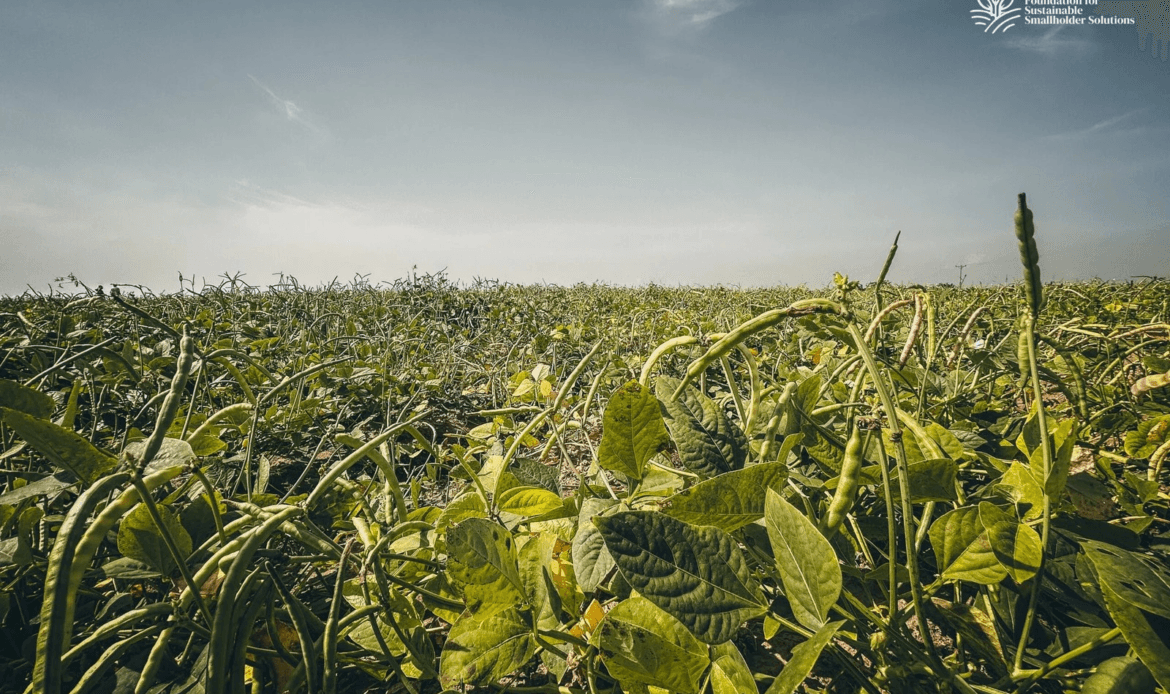
New gene-pyramided cowpea lines show strong resistance across multiple Striga strains without compromising yield, offering a scalable solution for smallholder farmers.
A new study led by researchers from the Foundation for Sustainable Smallholder Solutions (FSSS) has achieved a significant breakthrough in the fight against Striga gesnerioides, one of the most devastating constraints to cowpea production in sub-Saharan Africa.
The research demonstrates that it is now possible to develop cowpea varieties that combine multi-gene resistance to Striga with strong yield performance, addressing a long-standing trade-off that has limited previous breeding efforts.
Using advanced marker-assisted breeding techniques, the study successfully combined resistance genes from multiple donor lines into an farmers friendly cowpea variety. Unlike conventional approaches that rely on single resistance genes, which often break down over time, this method delivers more durable and broad-spectrum resistance.
To ensure real-world relevance, the researchers introduced a novel screening approach by testing the new lines against a composite Striga population collected from multiple regions in northern Nigeria. This approach enabled the simulation of diverse field conditions within a controlled environment, increasing confidence in the stability and applicability of the results.
One of the most significant findings is the identification of a subset of cowpea lines that exhibit both low Striga infestation and strong yield performance, demonstrating clearly that resistance does not have to come at the expense of productivity.
The study also confirms that Striga resistance in these lines is governed by two dominant genes, so the issues of gene breakdown have been handled through gene pyrimidine, making it easier to predict and accelerate breeding outcomes. Additionally, the high heritability of both resistance and yield traits suggests that these improvements can be reliably passed on to future generations.
Researchers further observed a strong negative relationship between Striga infestation and yield performance, reinforcing the urgent need for resistant varieties as a pathway to improving farmer productivity and strengthening food security.
The research was led by Dr Isaiah Gabriel, a seed system expert with extensive experience in crop productivity, smallholder farmer development, and sustainable innovation, alongside Professor Lucky Omoigui, a distinguished seed systems specialist known for his contributions to advancing agricultural innovation and strengthening food security across Africa.
According to Dr Isaiah Gabriel, Lead Researcher and Executive Director of FSSS, “This work shows that we can move beyond temporary solutions and develop cowpea varieties that are both resilient across different Striga genesneriodes bio-type in Nigeria. It represents a critical step towards securing the livelihoods of millions of smallholder farmers who depend on this crop.”
With cowpea serving as a major source of protein (26%) and income across West Africa—and Nigeria recognised as the world’s largest producer—the implications of this research are far-reaching. The newly developed lines are now positioned for further field validation and eventual release to farmers in Striga-endemic regions.
The study is published in Discover Agriculture and is available on our Knowledge Repository for further review.