- Welcome to FSSS Nigeria!
- info@fsssolutions.org
- 1190, Mabushi, Abuja

Beyond Farm Inputs: What Smallholder Farmers Need to Make Their Farms Work
An FSSS assessment across four Nigerian states reveals why access to inputs alone is not enough, and what farmers say they need to improve their businesses.
AGRI INSIGHT | 3 November 2026
What happens after a farmer gets the seeds, plants them and harvests a good crop? For many smallholder farmers, this is where another set of challenges begins.
Limited storage, expensive processing, weak market connections and inadequate finance can prevent farmers from getting the full value of their harvest. These challenges raise an important question: what services do farming communities actually need to make agriculture more productive and profitable?
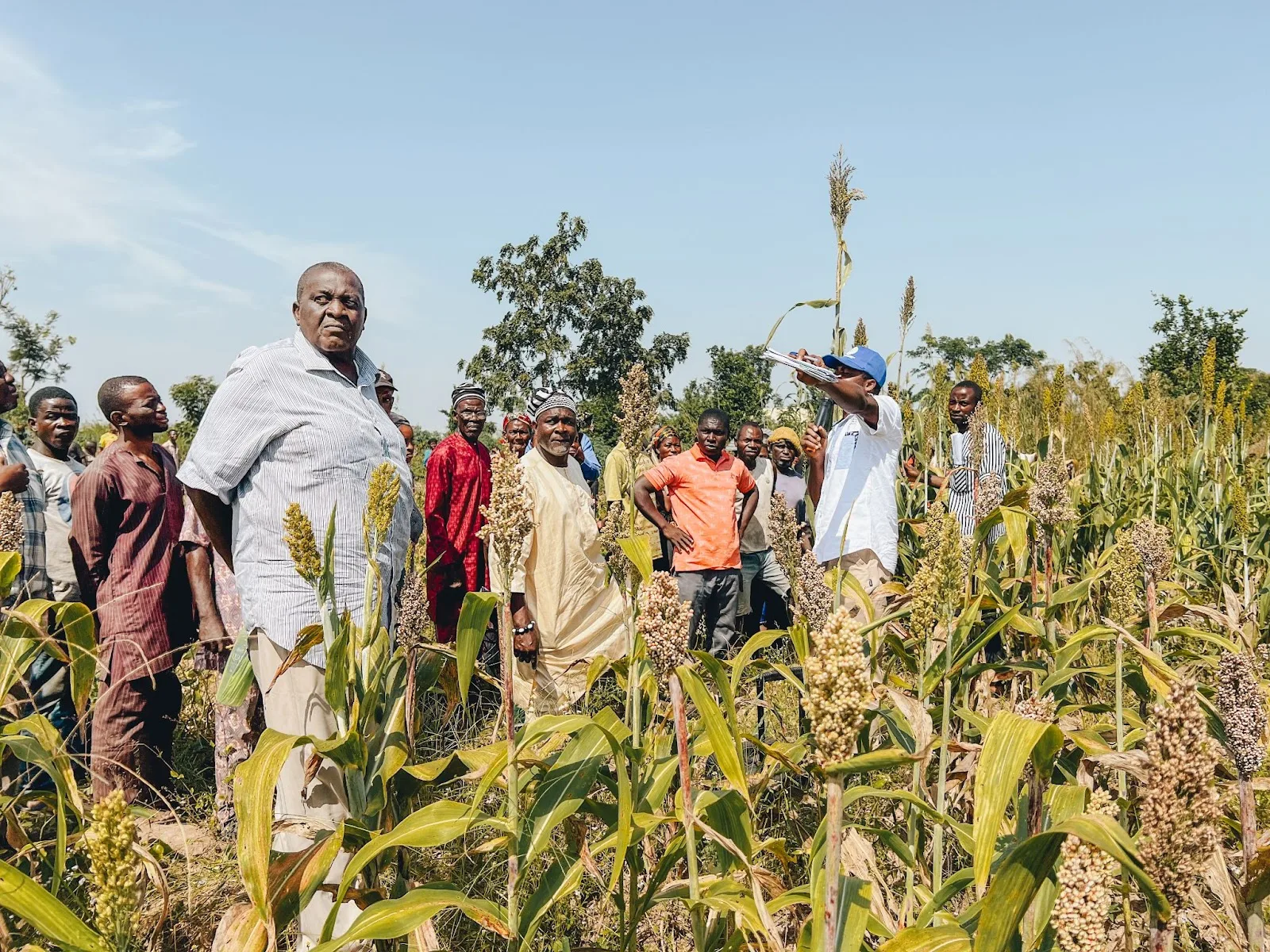
To understand this, the Foundation for Sustainable Smallholder Solutions (FSSS) conducted a Farmers’ Hub Value Chain and Processing Needs Assessment in September 2026, covering 10 farming communities across Ebonyi, Edo, Kogi and Niger States. The assessment involved 213 farmers through 11 focus group discussions.
The findings reveal that the constraints facing smallholders extend well beyond access to farm inputs.
Nine of the 11 focus group discussions identified inadequate fertiliser supply and limited access to finance as major production constraints. Although 61 per cent of participants reported using fertiliser, only 16 per cent considered it affordable. Access to improved seeds presented a similar challenge.
The assessment also uncovered a significant gap in agricultural advisory services: none of the 213 participants reported receiving extension support during the previous farming season. For farmers who must travel long distances to obtain inputs and have limited access to technical advice, improving productivity remains an uphill task.
The challenges do not end at harvest. All 11 focus group discussions reported post-harvest losses, with two reporting losses exceeding 30 per cent. Poor storage, pests, moisture and delays in processing were among the factors responsible.
The consequences go beyond lost produce. Farmers without adequate storage often have little choice but to sell immediately after harvest, sometimes at distress prices. Processing presents another challenge. Cassava and rice emerged as prominent value chains, but high processing costs, unreliable machinery and long waiting times limit farmers’ ability to add value to their produce.
The demand for better facilities was particularly strong, with cassava processing machines requested in 10 of the 11 discussions and rice mills in eight.
Even when farmers manage to produce and process their crops, securing a fair price remains difficult. Most rely on village markets and local traders, often without regular buyers or reliable market information. The assessment found that 10 of the 11 discussions reported instances of buyers rejecting produce or reducing prices because of quality concerns.
Finance is another major gap. Farmers rely heavily on personal savings, with limited access to formal credit. Yet 10 discussions identified credit as a service they would like to access through Farmers’ Hubs.
These findings point to the need for a more connected approach to agricultural services, one that links production support with processing, storage, finance and market opportunities.
Farmers were clear about the services they wanted. Input shops, cassava processing machines, rice mills, financial service points and produce aggregation facilities featured prominently in their responses. However, the assessment also found that priorities differ across locations. Crop production patterns, existing infrastructure and the challenges farmers face all influence the services communities need.
It also examined the opportunities and barriers affecting women and young people, who play important roles across agricultural value chains. This raises a bigger question for agricultural service delivery: how can Farmers’ Hubs be designed around local demand rather than a one-size-fits-all model?
Explore the full assessment
The findings offer a useful starting point for understanding what it takes to build Farmers’ Hubs that respond to farmers’ real needs. But the numbers tell only part of the story.
The full Farmers’ Hub Value Chain and Processing Needs Assessment Report explores the findings across the four states, examines specific value chain opportunities, highlights differences between communities and identifies priority services to guide Hub development and investment.
Read the full report to explore the evidence, understand what farmers are asking for and discover the opportunities for building more responsive agricultural service platforms.