

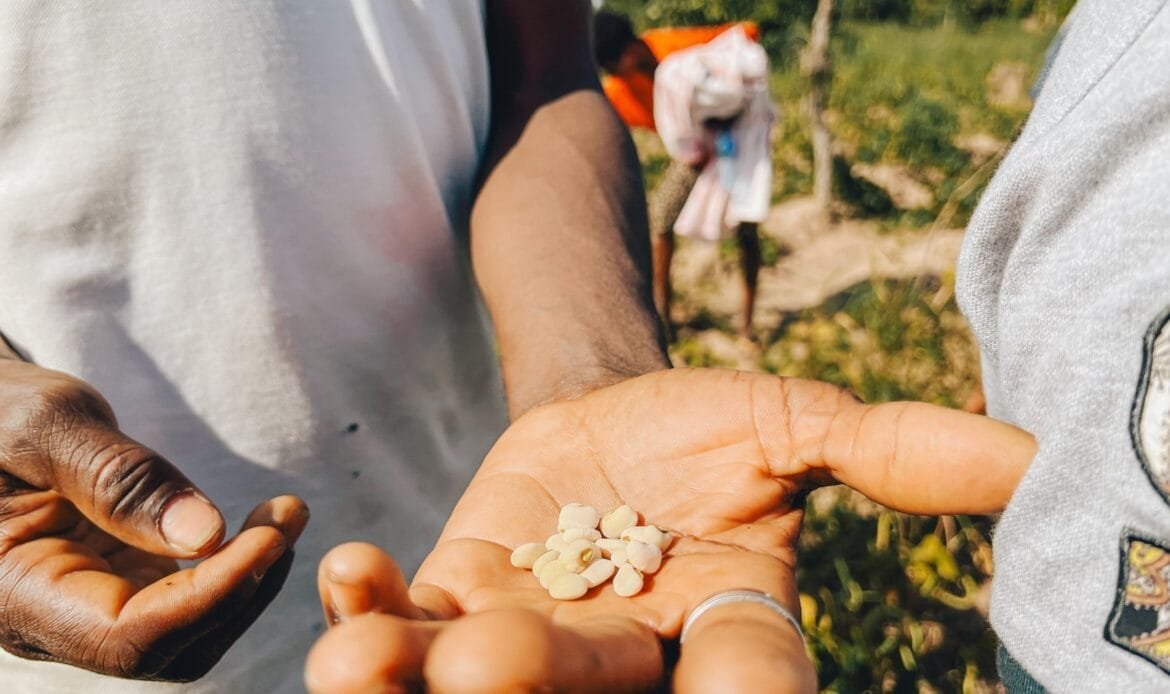
We are a few weeks away from the start of the rain-fed farming season in Nigeria, but across many farming communities in Nigeria, many women will not decide what is grown on their farm.
“I farm the land, but I don’t always choose what goes into it.”
It is already an established fact that women form the backbone of agricultural labour. They are in the fields at dawn, tending crops under the heat of the day, and working late into the evening to process what is harvested. But despite this central role, the authority to decide what is planted often rests elsewhere.
For Sekina Danzule, a young female farmer in Faggo, Shira Local Government Area of Bauchi North, that reality is both familiar and slowly changing.
“In our household, my husband is primarily responsible for selecting the seeds we plant,” she explains. “Once the seeds are selected, I take responsibility for keeping them safe until it is time for planting.”
Her role sits at the centre of the farming system, but her influence at its starting point has not always been guaranteed.
The Hidden Reality Beneath the Soil
In many communities, decisions about what is planted are shaped less by capability and more by tradition.
Sabo Maichibi, a farmer from Kurba in Giade Local Government Area, describes how this system has worked for generations.
“In our community, the responsibility of selecting the type and species of seeds to plant is traditionally handled by elder men,” he says. “This is because they are believed to have more experience and knowledge in identifying the best seeds for planting.”
These norms are deeply rooted. They are not always enforced, but they are widely accepted, and they shape who is seen as a decision-maker.
“At present, women are generally not involved in this process,” Sabo adds. “However, this does not mean they cannot contribute.”
That distinction matters because it reveals that the barrier is not ability, but access to knowledge, platforms, and voice.
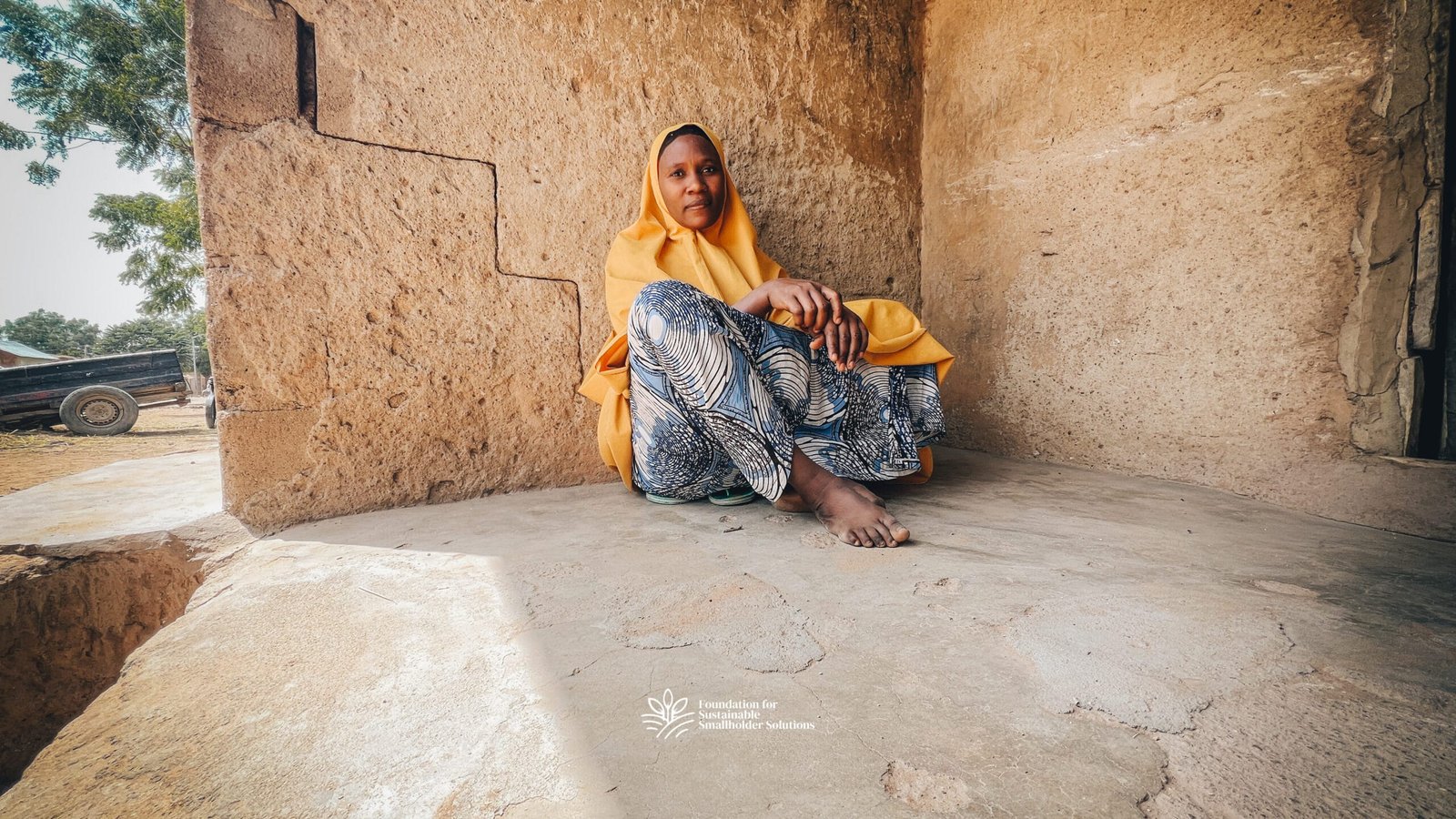
Between Tradition and Transition
Within households, change is already quietly underway.
Sekina describes a more collaborative approach emerging in her home.
“My husband may suggest a particular type of seed to plant, but if I am not satisfied with that choice, I can recommend an alternative,” she says. “In such cases, my opinion is considered, and we agree on the most suitable option together.”
This is not full control, but it is movement. A shift from silence to participation.
Still, this progress is uneven.
“In our community, women generally have the right to choose the crops they want to grow,” she explains. “However, this is not the case everywhere. In some nearby villages, women still depend entirely on their husbands’ decisions.”
The contrast highlights a broader truth: women’s agency in agriculture is not fixed. It is shaped by exposure, support, and opportunity.
What the ESTRRA Project Baseline Revealed
To better understand these dynamics, the Empowerment of Smallholders to Thrive and Build Climate Resilience through Regenerative Agriculture (ESTRRA) Project, implemented by the Foundation for Sustainable Smallholder Solutions across seven Local Government Areas—Katagum, Giade, Itas-Gadau, Gamawa, Zaki, Shira, and Jama’are—in Bauchi North Senatorial District and funded by the Heineken Africa Foundation, carried out a baseline study.
Findings from ESTRRA-supported communities brought this reality into sharp focus.
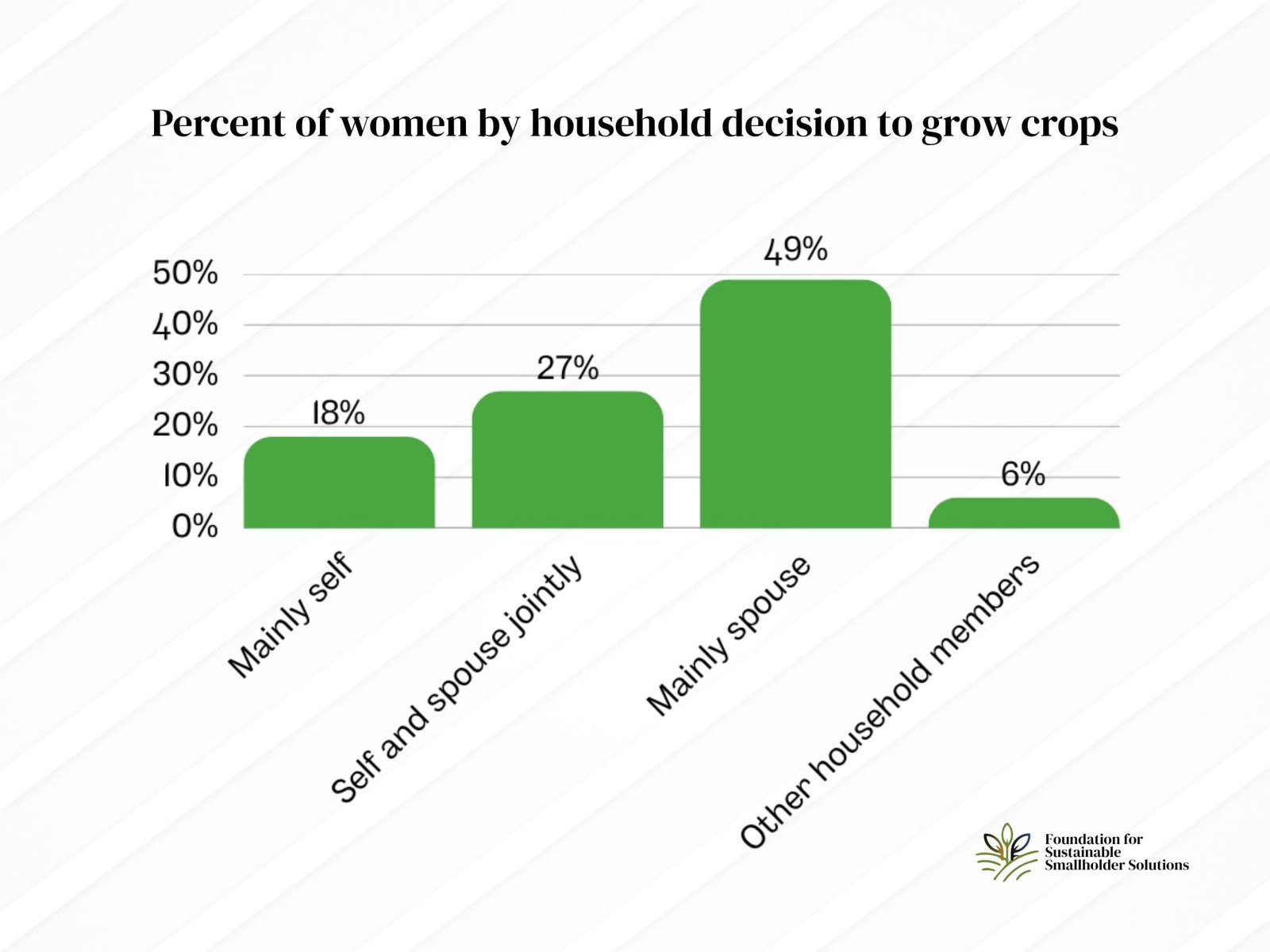
When asked who makes decisions about which crops to grow, only 18% of women reported deciding mainly on their own. Another 27% said decisions were made jointly with their spouse. But nearly half, 49%, said these decisions were made mainly by their spouse, while 6% pointed to other household members.
These figures tell a clear story: most women are deeply involved in farming, but not in deciding what is farmed.
It is a gap not just in participation, but in power.
At the same time, perspectives like Sabo’s point to a pathway forward.
“We believe that women can be included in seed selection if they are properly trained and guided,” he says. “This training can come from their husbands or from external organisations.”
The implication is simple but important: when knowledge is shared, decision-making can be shared too.
Why Seed Choice Matters More Than Ever
A seed is a small decision with far-reaching consequences.
For women, it determines not just what grows, but how families eat, earn, and adapt to an increasingly uncertain climate.
“It is very important for women to have the freedom to choose the type of seeds they want to grow,” Sekina says. Within the home, women often cultivate vegetables such as spinach and okra, crops that go directly into daily meals.
“These crops are very useful, as they are harvested and used for household consumption, particularly for preparing meals.”
Their choices reflect practical intelligence grounded in lived experience.
Groundnuts, for instance, are widely preferred, not just for income, but for their multiple uses.
“One of my reasons for planting groundnuts is to utilise the leaves for feeding my animals while also benefiting from the seeds for food and possible income,” she explains. “The seeds are used for cooking soups, processed into oil, and used to produce kuli-kuli. Surplus can also be sold in the market.”
In these decisions lies a complete system, one that connects soil, nutrition, livestock, and income, showing that when women shape these choices, farms become more resilient and households more secure.
How ESTRRA Is Changing the Narrative
This is where ESTRRA is making a deliberate and measurable difference.
Through its Farmers’ Hubs, the project is not only improving access to high-quality, climate-resilient seed varieties, it is also reshaping who gets to choose them.
“At the core of the project, it is our goal that women do not just come to the hubs simply to receive inputs,” Gabriel Akanbi, Business Development Specialist on the ESTRRA Project, explains. “We want them to come asking questions, comparing varieties, and making their own decisions. That shift in confidence is just as important as the seeds themselves.”
As part of the project’s activities, the 14 Farmers’ Hubs being established serve as spaces where women are introduced to a range of options and supported to understand their characteristics, yield potential, climate suitability, and nutritional value. Demonstration plots allow them to see performance firsthand, while peer learning creates space for discussion, comparison, and confidence-building.
Crucially, the 8,400 women this project is targeting are not being positioned as beneficiaries, but as decision-makers.
They test, they question, and they decide.
This shift is already influencing household dynamics. As women gain knowledge and confidence, their voices carry more weight in discussions about what to plant. Decisions that were once predetermined are now negotiated and increasingly shared.
As Sabo notes, “By educating and training women, we will promote knowledge sharing within households, encourage greater participation, and support the growth and development of our community.”
In this way, ESTRRA is doing more than introducing new seeds. It is redistributing knowledge and, with it, power.
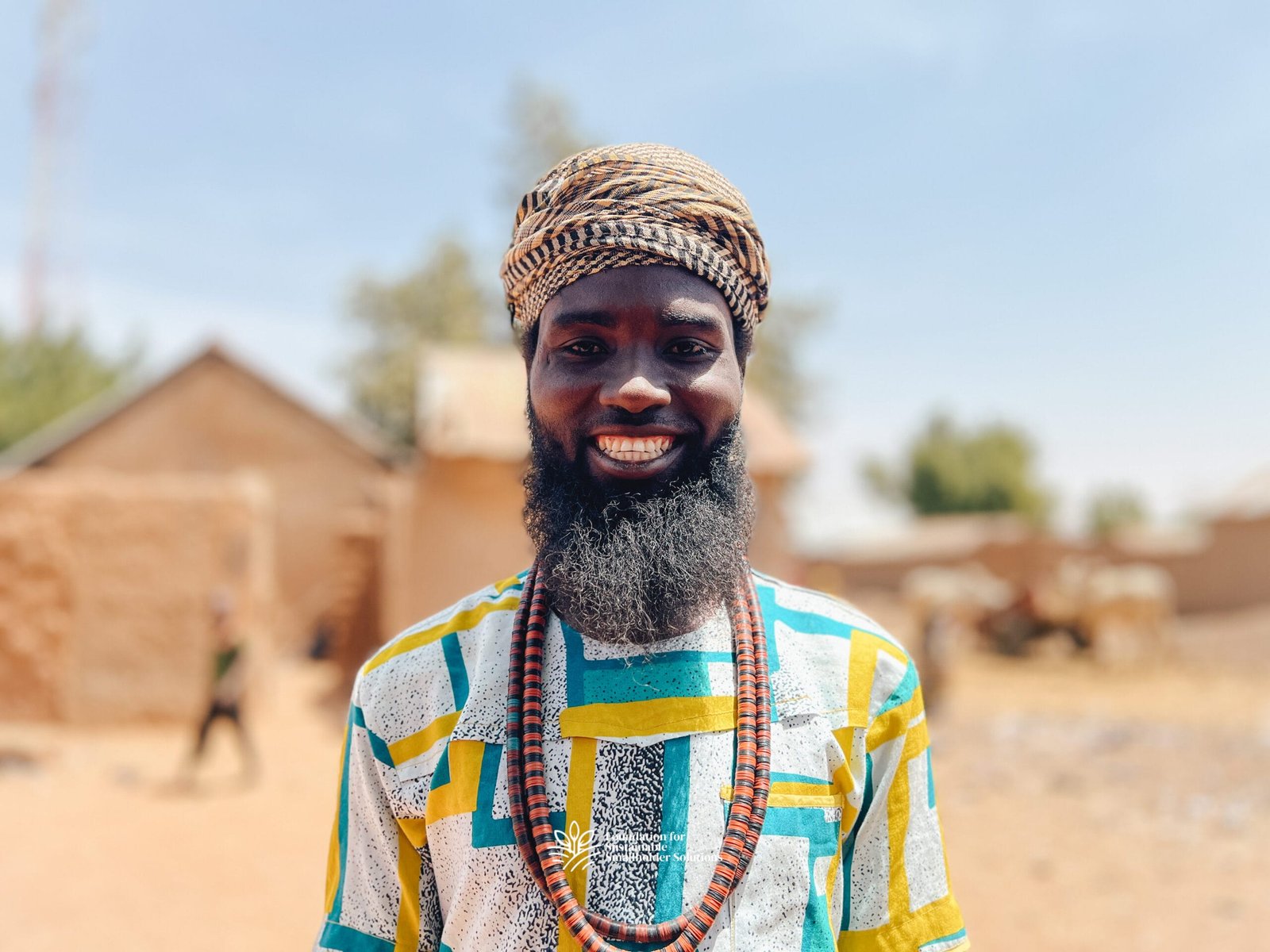
Beyond Farming: A Question of Rights and Dignity
The right to choose seeds is, ultimately, a question of dignity.
It is about recognising women as equal partners in the systems they sustain, not just as labourers, but as thinkers, planners, and decision-makers.
“Allowing women to make decisions about seed selection is very important,” Sekina emphasises. “Women understand the nutritional needs of the household. They manage food preparation and usage. They contribute directly to livelihood support and income generation.”
This is what makes seed choice a women’s rights issue because it sits at the intersection of food, income, climate resilience, and autonomy.
And it is why the conversation matters far beyond the farm. While the focus is often on big, visible milestones, equality is also built in smaller, everyday decisions that shape livelihoods and futures.
Sometimes, it begins with something as simple and as powerful as choosing what to grow.
“We Know What Our Families Need”
In the near future, the hope is that the conversation around seeds begins to change and aligns with Sekina’s perspective.
“Every woman has the right to participate in seed selection and decision-making,” she says. “This involvement strengthens cooperation within households and contributes to better agricultural outcomes for the community.”
And if that shift comes, from a reality where most women follow decisions to one where they shape them, then the impact will extend far beyond a single harvest. It will reshape who holds power and entrench women more firmly at the very beginning of the food system.
One decision. One season. One seed at a time.