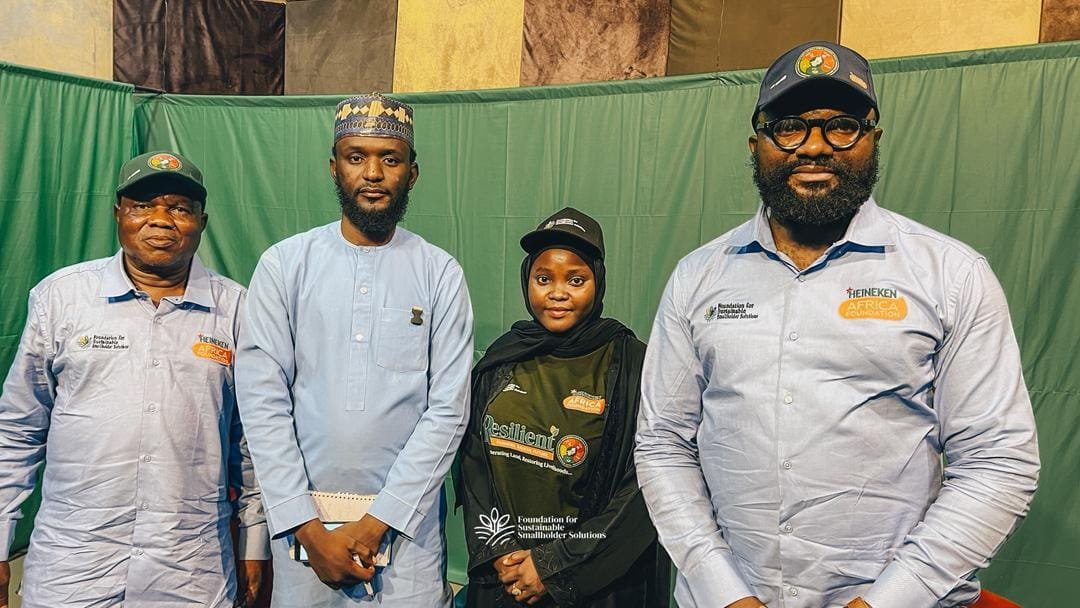

As part of the Foundation’s strategic communications and community engagement efforts, we commenced a targeted media sensitisation tour in Bauchi State to create awareness and secure grassroots buy-in for the Empowerment of Smallholders to Thrive and Build Climate Resilience through Regenerative Agriculture (ESTRRA) Project.
The media tour was led by the Brand and Communications Manager, Clinton Mena Inene, with Senior Agronomist and Project Coordinator (ESTRRA), Dr Reuben Solomon, alongside Hajara Umar, Junior Agronomist, and focused on reaching farmers across Northern Bauchi, where project implementation is set to begin.
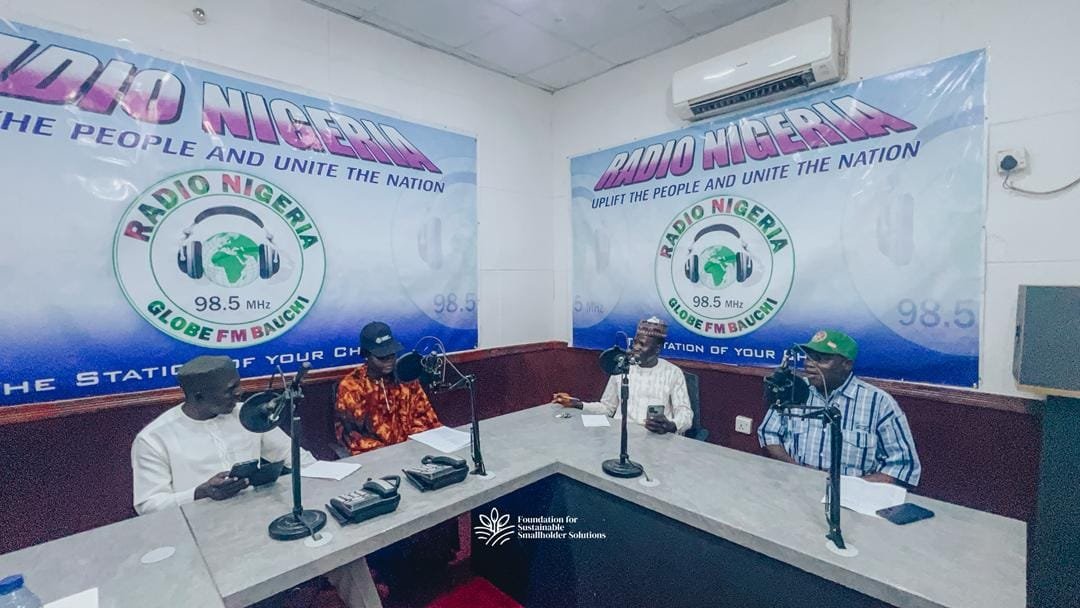
The first stop of the tour was Radio Nigeria (Globe FM) Bauchi, where the team featured on the popular farmers’ programme “Noma Da Kiwo.” Delivered in Hausa to ensure clarity and accessibility, the session provided farmers with a practical understanding of the project’s objectives, target beneficiaries, and opportunities for participation.
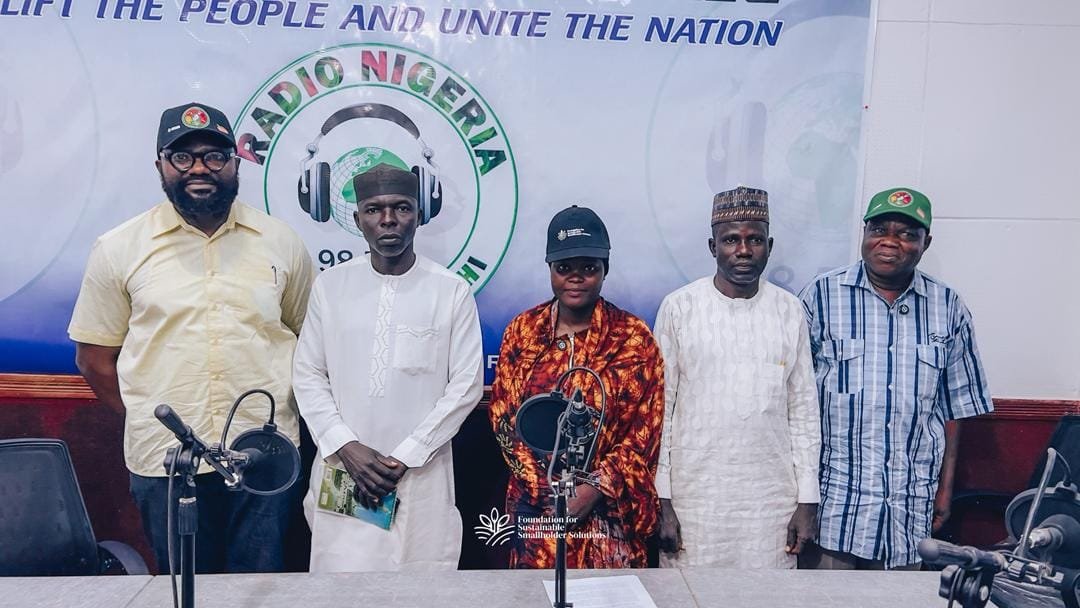
Speaking during the programme, Dr Reuben Solomon explained that the ESTRRA Project is designed to respond directly to the realities faced by smallholder farmers in Bauchi North.
“This project is about helping farmers cope with climate challenges while improving productivity and income. Through regenerative agriculture, access to improved seeds, training, and the Farmers’ Hub model, we want farmers to farm better, earn more, and secure food for their households,” he said.
Hajara Umar also emphasised the project’s strong focus on inclusion, particularly for women and youth, noting that community-driven structures would play a central role in implementation.
“Women and young farmers are at the heart of this project. We want them not just as beneficiaries, but as active participants and leaders within their communities,” she added.
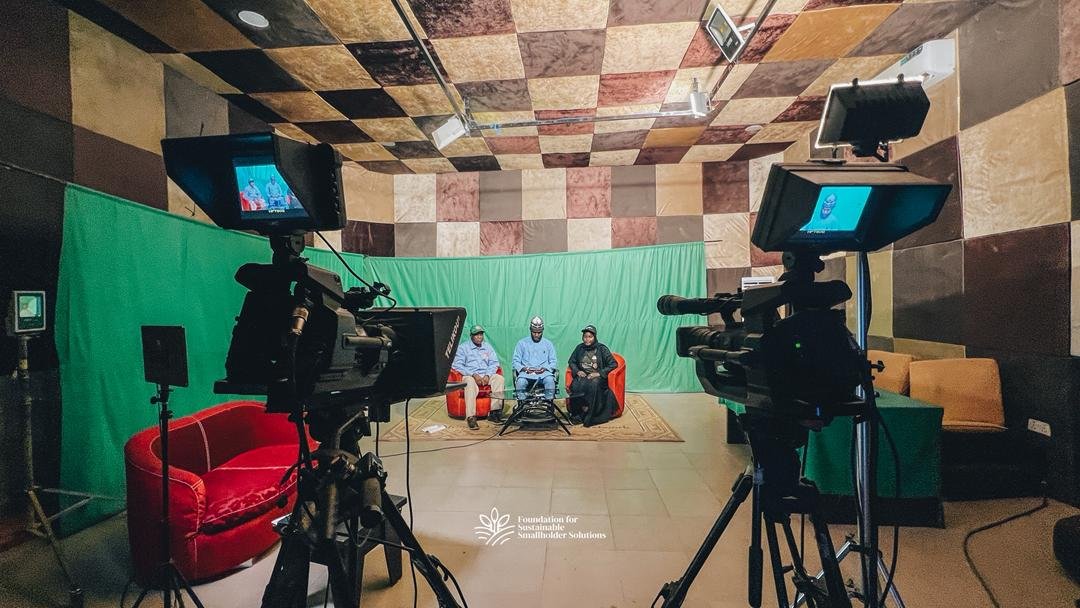
On the second day of the tour, the team visited NTA Bauchi, where they appeared on a special televised programme dedicated to discussing the ESTRRA Project in greater depth. The session provided an opportunity to visually demonstrate the project’s approach and reinforce trust among farming households.
During the television appearance, discussions centred on key themes of the project implementation framework: who the project is for and the LGAs it covers; how the Farmers’ Hub model will bring services closer to rural farmers; what farmers stand to gain in terms of productivity, income, nutrition, and climate resilience and; how farmers will be selected transparently through community structures.
Dr Solomon highlighted that the Farmers’ Hub model would serve as a practical bridge between farmers and essential services.
“The Farmers’ Hub brings seeds, training, mechanisation, climate information, and market access into one trusted community space. It reduces costs for farmers and helps them move from subsistence to farming as a business,” he explained.
The media tour forms a critical part of the communications objectives of the ESTRRA Project, which aims to reach 14,000 smallholder farmers directly and over 70,000 indirect beneficiaries across Katagum, Shira, Jama’are, Giade, Itas-Gadau, Zaki, and Gamawa LGAs between 2025 and 2028. The project is funded by the Heineken Africa Foundation and implemented by FSSS in partnership with local Community-Based Organisations and government institutions.
By engaging farmers through trusted radio and television platforms, FSSS seeks to build early awareness, manage expectations, and foster community ownership from the outset.
As the project implementation progresses, FSSS will continue to leverage local media, community meetings, and extension networks to ensure farmers are well-informed, confident, and ready to participate in building a more climate-resilient and prosperous agricultural future for Bauchi State.