- Welcome to FSSS Nigeria!
- info@fsssolutions.org
- 1190, Mabushi, Abuja

Strengthening Dryland Agriculture: FSSS and CIMMYT Drive Adoption of Breakthrough Sorghum, Millet, and Groundnut Varieties
NEWS
Between 28 March and 2 April 2026, the Foundation for Sustainable Smallholder Solutions (FSSS), with support from CIMMYT, convened a series of stakeholder engagement and product showcase events across six states in Nigeria’s drylands. These engagements formed a critical component of the project titled “Scaling Breakthrough Sorghum, Millet, and Groundnut Adoption Through Strengthened Farmers’ Hubs in Nigeria’s Drylands.”
Held across FSSS Farmers’ Hubs in Bauchi, Benue, Nasarawa, Jigawa, Kano, and Kaduna States, the events brought together farmers, processors, aggregators, and other value chain actors to evaluate improved crop varieties and align on pathways for scaling adoption ahead of the 2026 rainy season.
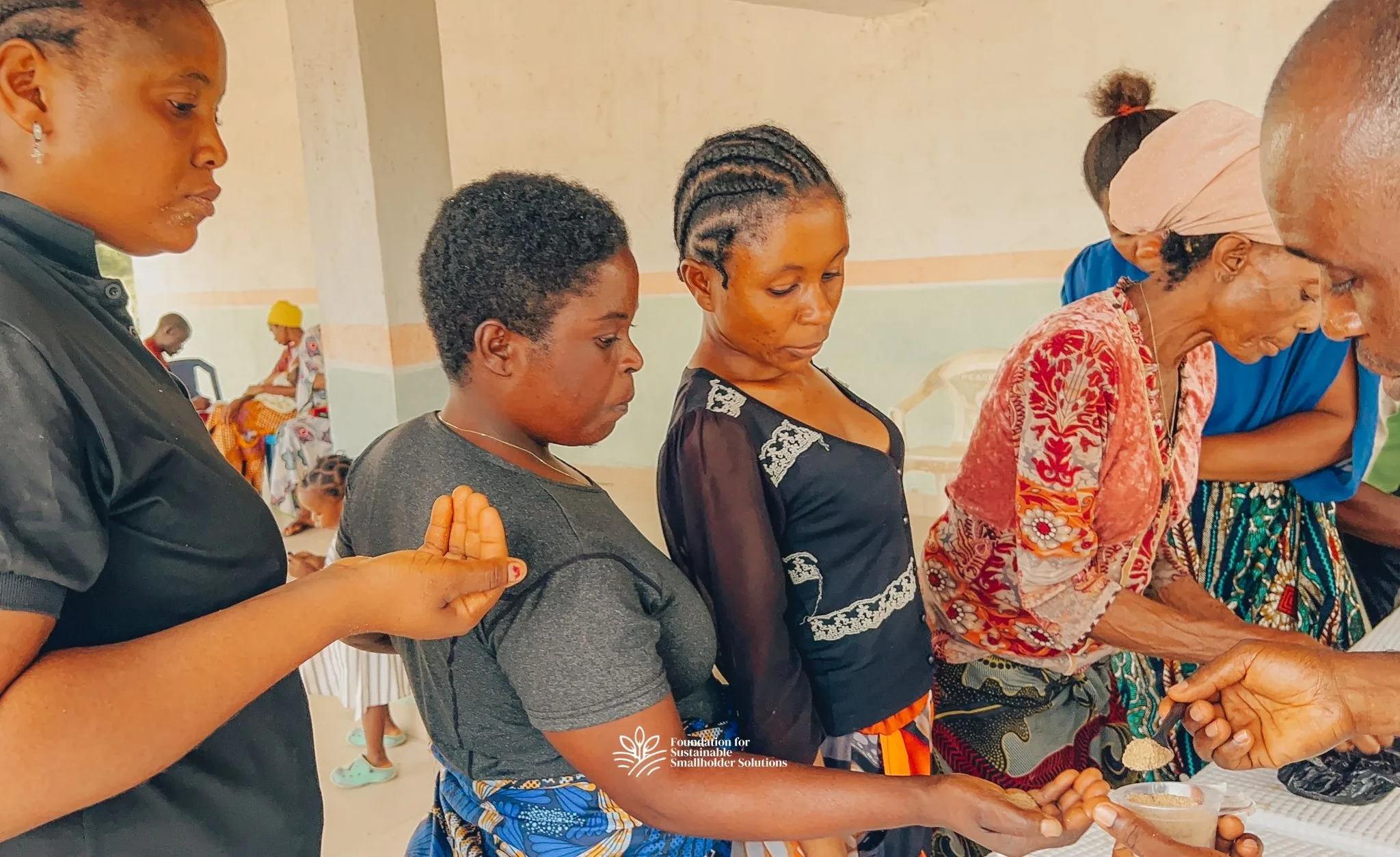
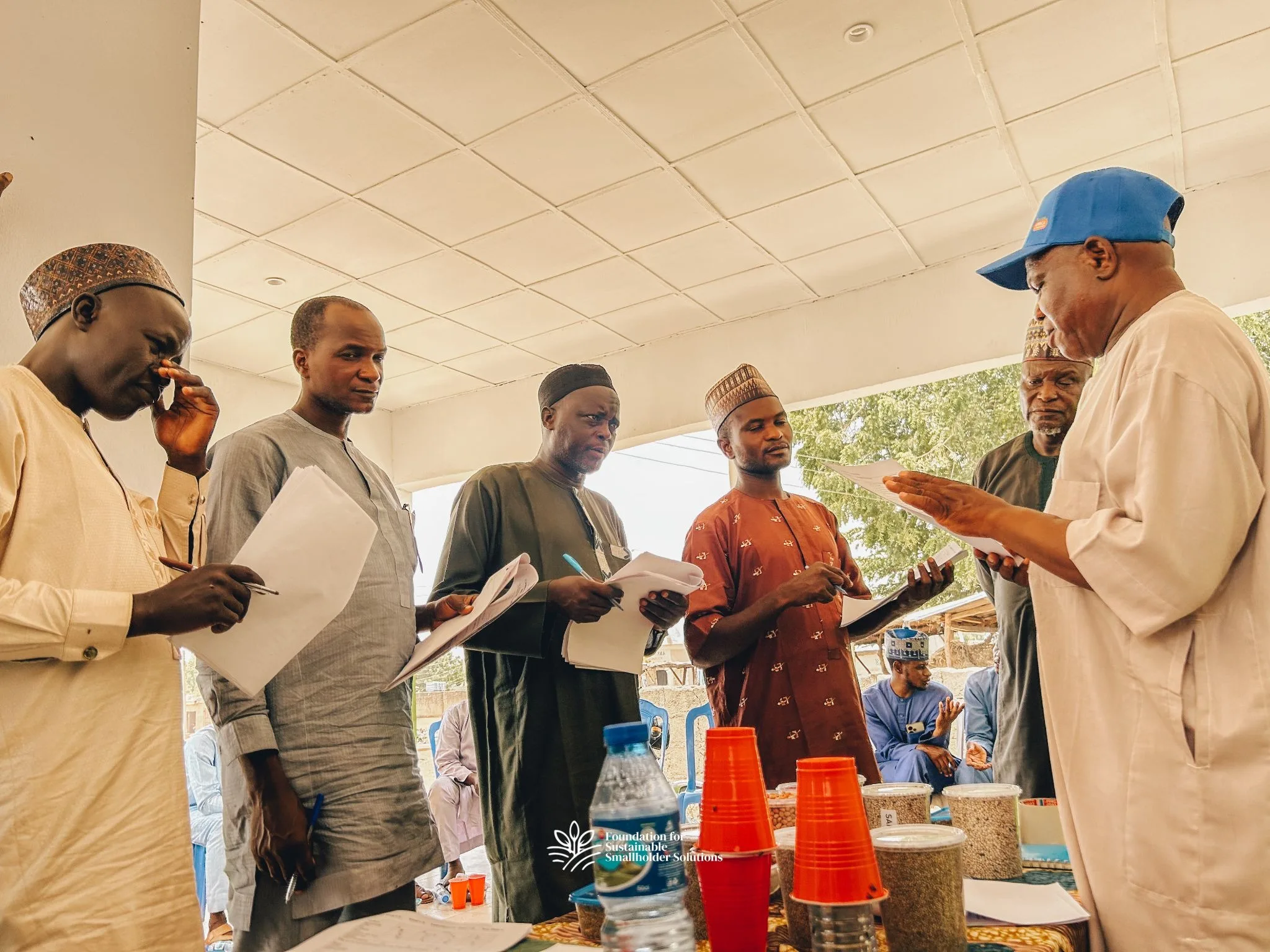
At the different locations where the event was held, participants engaged in hands-on assessments of improved sorghum, millet, and groundnut varieties. The session, facilitated by the Foundation’s Senior Agronomists; Dr Reuben Solomon, Dr Hassan Inuwa and Dr Nater Iyorkaa, focused on evaluating agronomic performance, grain quality, and market suitability. Participants examined the physical characteristics of the grains and shared insights based on their roles across the value chain.
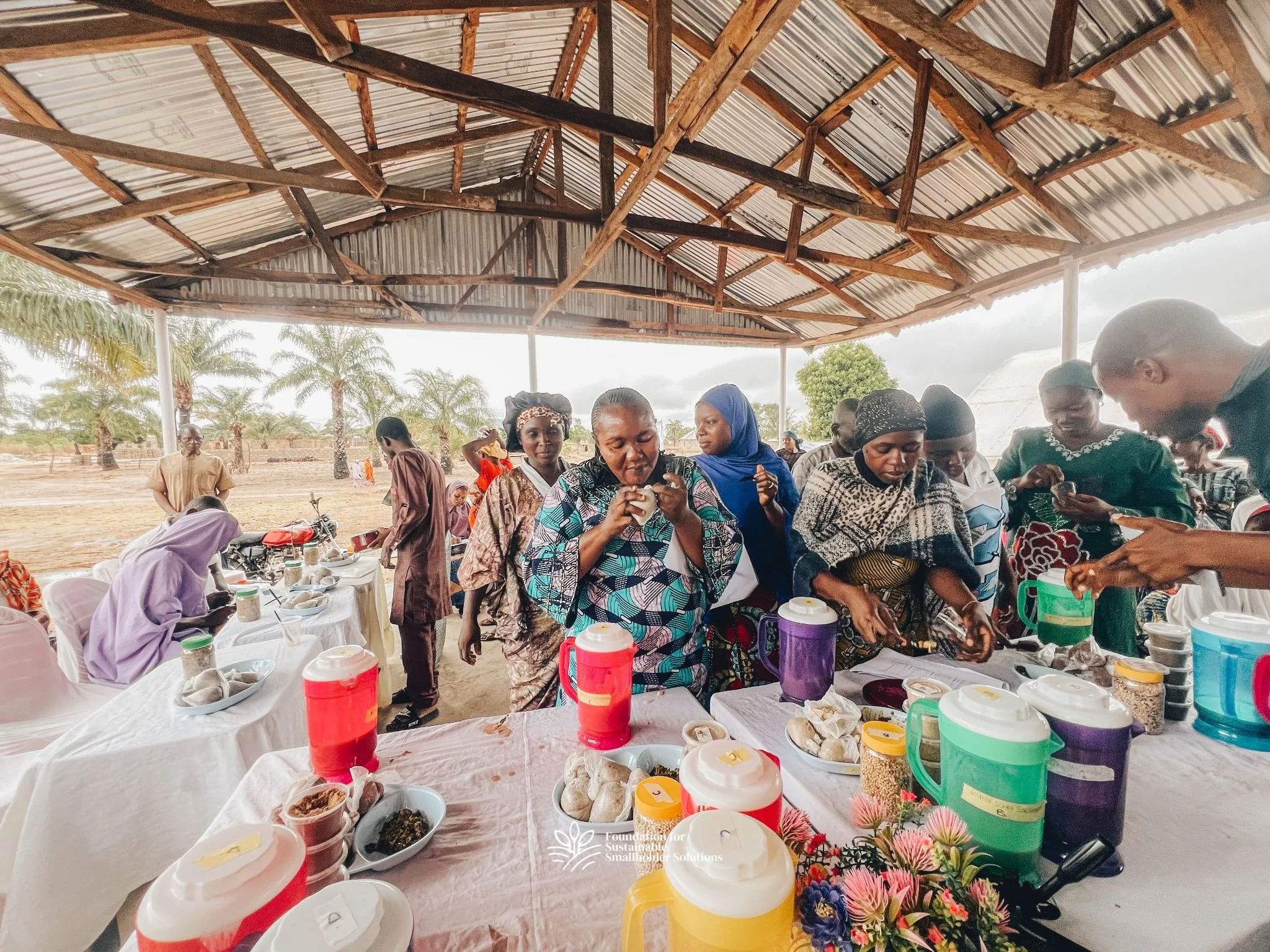
A key highlight across all locations was the palatability testing exercise, where processed products such as local foods and beverages derived from the improved varieties were presented for tasting. This practical approach enabled participants to assess taste, texture, and processing quality, while also providing immediate feedback on consumer acceptability and market potential. The insights gathered are expected to inform demand creation strategies and strengthen the positioning of these varieties as viable market-driven solutions.
Speaking on the significance of the engagement, Dr Reuben Solomon, Senior Agronomist in Bauchi, noted:
“These engagements are designed to bridge the gap between innovation and adoption. By allowing farmers, processors, and aggregators to interact directly with these varieties, we are building confidence not just in their yield potential, but in their real market value. This is essential for driving sustainable uptake.”
In Kaduna State, Senior Agronomist Dr Hassan Inuwa emphasised the importance of aligning production with market needs:
“Adoption will only happen at scale when farmers are confident that what they produce meets market demand. Through these engagements, we are ensuring that improved varieties are not only agronomically superior but also commercially viable across the value chain.”
Similarly, Dr Nater Iyorkaa, overseeing activities in Benue and Nasarawa States, highlighted the role of the Farmers’ Hub model in accelerating impact:
“Our Farmers’ Hubs are more than input distribution points; they are centres for knowledge, innovation, and market linkage. This initiative strengthens their capacity to serve as launchpads for breakthrough technologies that can transform livelihoods in dryland communities.”
Participants across the different locations expressed appreciation for the opportunity to engage directly with improved varieties and deepen their understanding of their benefits.
Rachel Bala Yaro, a farmer from Zaki in Bauchi State, shared:
“This experience has opened my eyes to better-performing varieties. I now understand what to look for, not just in yield but also in quality. It will help me make better decisions on my farm.”
Shilumun Wachin, a millet farmer from Tyowanye in Benue State, added:
“We have always relied on familiar seeds, but seeing and testing these new varieties has shown us their potential. I am encouraged to try them in the coming season.”
Nguwasen Terngu, a groundnut and sorghum farmer from Ipav, Gboko, Benue State noted:
“The discussions helped us understand market preferences better. This knowledge will guide how we produce and sell our crops.”
From the processing perspective, Halima Abdulahi Zakari, a millet and sorghum processor from Nasarawa-Eggon in Nasarawa State, highlighted the importance of quality:
“The taste and processing qualities of these varieties are very important for our products. This engagement has helped me identify which ones are best suited for my business.”
Ibrahim Abdullahi, an aggregator from Igabi in Kaduna State, emphasised market relevance:
“Consistency and quality are key for aggregation and supply. These improved varieties show strong potential, and I appreciate the opportunity to assess them firsthand.”
Another participant, Baffa Magaji from Bulkachuwa in Katagum LGA, Bauchi State, mentioned the broader impact of the initiative:
“I have learned so much through this engagement. I am now aware of different varieties of millet, sorghum, and groundnut, their nutritional value, and their benefits. We are very grateful to FSSS for equipping us with the knowledge to improve both our farming and business activities.”
The multi-state engagements reflect the Foundation’s commitment to strengthening seed systems, improving market alignment, and enhancing the capacity of Farmers’ Hubs to deliver impactful agricultural innovations. By fostering direct interaction between producers and market actors, the initiative is laying the groundwork for increased adoption of breakthrough varieties that offer higher yields, improved resilience, and stronger market appeal.
As Nigeria’s dryland farmers prepare for the 2026 rainy season, the outcomes from these stakeholder engagements will play a crucial role in shaping demand, guiding extension messaging, and ensuring that improved sorghum, millet, and groundnut varieties reach scale where they are needed most.