- Welcome to FSSS Nigeria!
- info@fsssolutions.org
- 1190, Mabushi, Abuja

Northern Bauchi’s Smallholders Face Climate Crisis, But Hope Lies in Regenerative Agriculture
NEWS
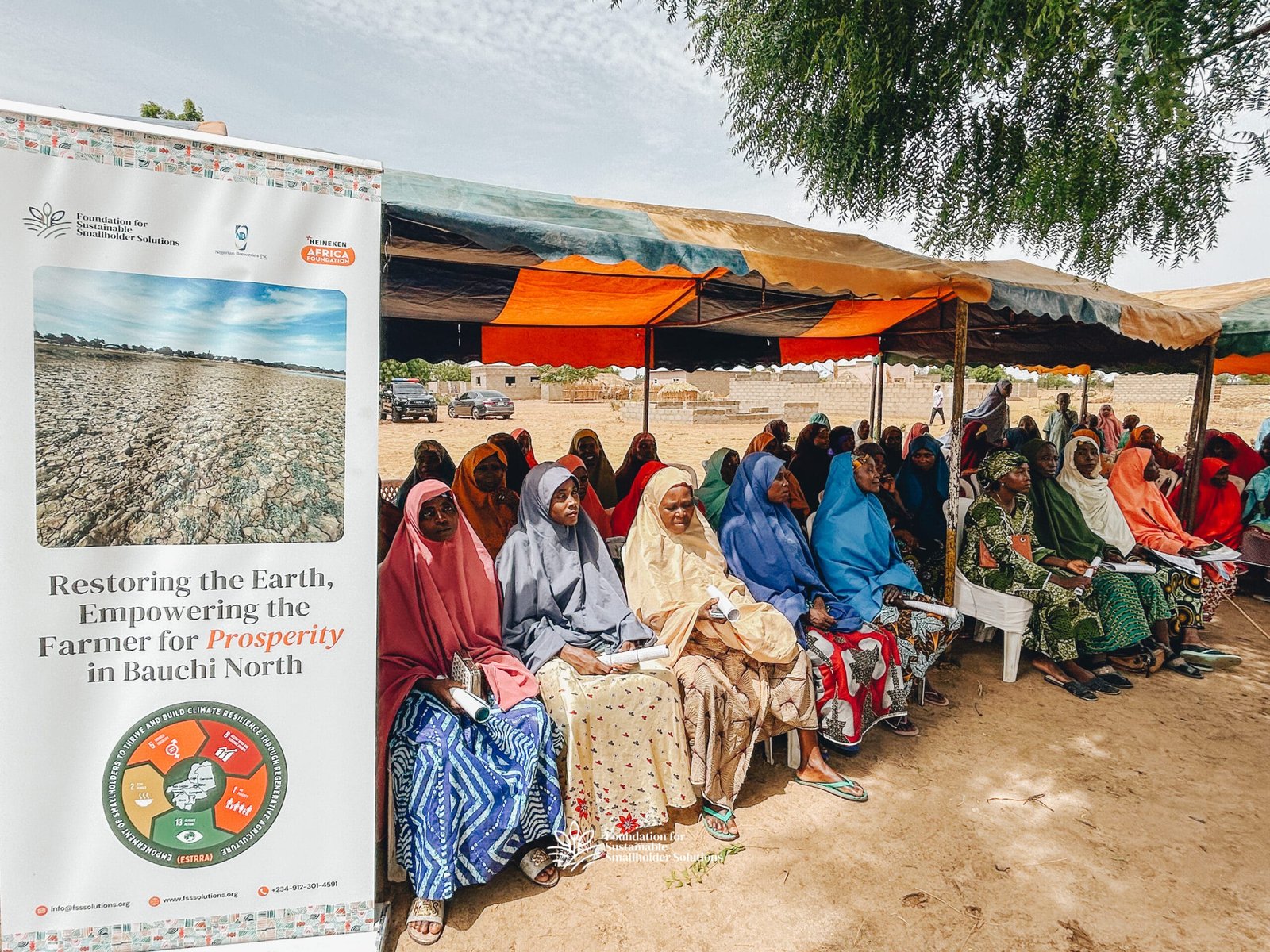
A new baseline study conducted under the Empowerment of Smallholders to Thrive and Build Climate Resilience through Regenerative Agriculture (ESTRRA) Project funded by the HEINEKEN Africa Foundation has revealed both the scale of the challenges smallholder farmers are facing in Northern Bauchi and the enormous opportunities they present for agricultural transformation.
The findings paint a sobering picture of the devastating impact of climate change on rural livelihoods among society’s most vulnerable class. More than 85% of 1,508 surveyed households reported experiencing moderate to severe climate-related harvest losses, with 36% losing more than half of their harvests. Meanwhile, simultaneously, land degradation is wreaking havoc and threatening agricultural productivity, with approximately 41% of farmland reported as degraded and many farmers experiencing declining yields.
The study also found that 98% of farmers have never received formal post-harvest training, while 79% lack adequate access to storage and processing facilities. These gaps contribute significantly to produce losses, reducing household incomes, and limiting opportunities for value addition.
Despite the challenges noted, the report also gives reasons to be optimistic. Northern Bauchi’s farming population is remarkably youthful, with more than half are aged between 18 and 35 years. This demographic presents a significant opportunity to accelerate the adoption of innovative farming practices, agribusiness services, and climate-smart technologies.
Evidence from the study shows that farmers who adopt climate-smart agricultural practices experience improved income outcomes. However, awareness and adoption remain low, with 86% of respondents reporting limited knowledge of regenerative and climate-smart agriculture.
The report also captures the critical role of women in agriculture, showing that though women contribute significantly to farming activities and made up 64% of survey respondents, many have limited influence over crop selection, cultivation, and production decisions and access to productive and processing resources. Addressing these disparities will be essential to achieving sustainable agricultural development.
The findings reinforce the urgent need for investments in regenerative agriculture, climate resilience, smallholder capacity building, post-harvest management, and inclusive market systems. With the right strategy and support, Northern Bauchi’s smallholders can move from vulnerability to resilience, building better livelihoods while restoring the natural resources upon which their future depends. To read the full baseline study report, visit our Knowledge Repository.